
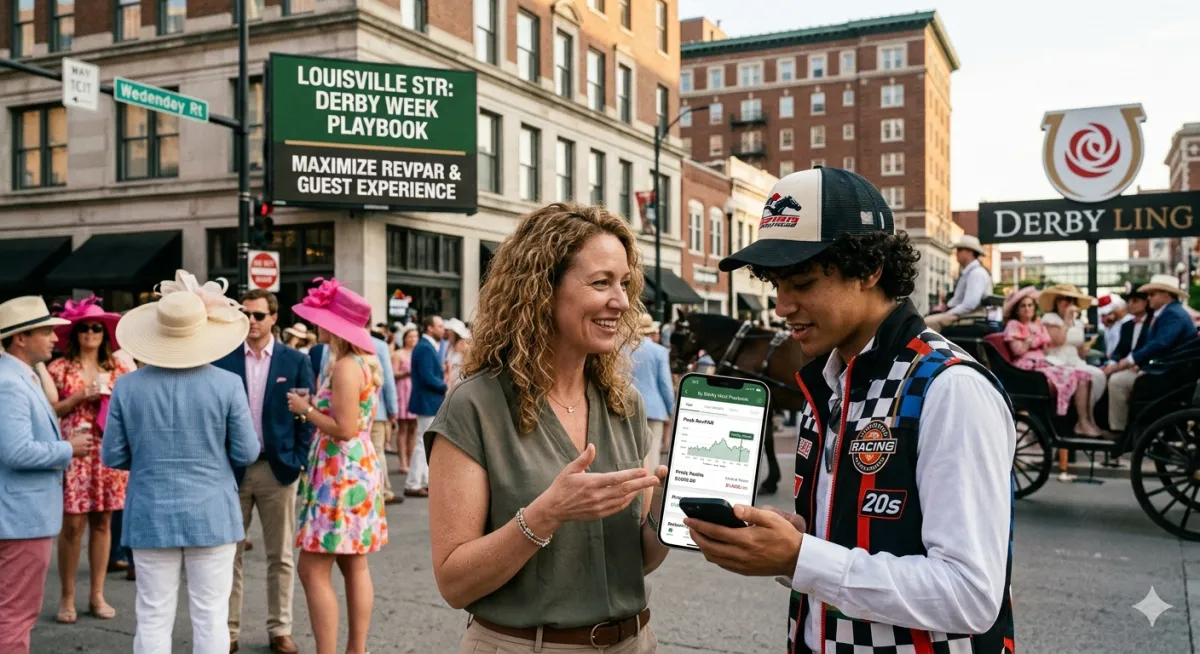
Kentucky Derby Airbnb Pricing: Maximize Derby Week ROI
Maximizing Kentucky Derby Week ROI: A Pricing and Operations Playbook for Louisville STR Owners
Overview
Kentucky Derby Airbnb pricing is the most important revenue decision a Louisville STR owner makes all year, because Derby week is the single highest-revenue period on the calendar. Nightly rates for the Thursday through Sunday window routinely command four to eight times normal pricing, and the owners who capture the most do three things consistently: they open booking windows early, they set three-night minimums, and they use tiered pricing that reflects proximity to Churchill Downs. The difference between an owner who plans Derby week and one who prices it like an ordinary weekend can be several thousand dollars on a single property.
Schedule a free call www.myzenstays.com and Zenstays will build your Derby week pricing strategy before the window opens.
Why Derby Week Is the Most Valuable STR Window in the Country
Average ADR multipliers from prior years
Derby week is not a normal demand spike. Average daily rates routinely run four to eight times baseline for the core race days, a multiplier few events in the country can match. That compression of a year's worth of premium pricing into a handful of nights is why Derby week deserves its own dedicated strategy rather than a standard dynamic pricing pass.
How Derby demand differs from concert and festival demand
A concert fills rooms for a night or two. Derby fills an entire city for the better part of a week, drawing a high-income, planning-ahead audience that books months out and expects a polished experience. That guest profile changes both how you price and how you operate, because these are not last-minute bargain hunters.
The Derby Week Pricing Strategy
When to open booking windows (and why early matters)
The highest-paying Derby guests book early, often many months ahead, locking in travel around a fixed date. If your calendar is not open when they are searching, that revenue goes to a competitor. Opening booking windows early, well ahead of the race, is the first move in capturing peak rates rather than scrambling for leftover demand.
3-night minimum logic
A three-night minimum protects you from selling your best inventory night by night and ending up with orphaned single nights you cannot fill. Derby guests are overwhelmingly multi-night, so a minimum stay matches actual demand while maximizing total revenue across the window.
Tiered pricing by proximity to Churchill Downs
Not every Louisville property commands the same Derby premium. Proximity to Churchill Downs is the single biggest driver, so pricing should be tiered: properties within walking distance or a short drive carry the steepest multipliers, while those farther out price competitively against their own micro-market. Flat pricing across a portfolio leaves money on the table.
Want your property priced to its true Derby ceiling? Schedule a free call www.myzenstays.com and Zenstays will get back to you fast.
Operations and Guest Experience for High-ADR Stays
Pre-stay communication for high-paying guests
Guests paying a premium expect a premium experience starting before arrival. Clear, proactive pre-stay communication covering check-in, parking, and local logistics sets the tone and prevents the small frictions that turn into reviews. At Derby ADRs, a single bad review costs far more than usual.
Turnover and supply planning for back-to-back Derby bookings
Derby week often means tight, back-to-back turnovers with no margin for error. Cleaning crews, linens, and supplies need to be scheduled and confirmed well in advance, because vendor availability tightens citywide during the same window. Owners who wait until race week to line up turnover support are the ones who run into problems.
Damage protection and security deposits for the week
High-demand, high-energy stays warrant stronger damage protection and clear security deposit terms. Setting expectations up front protects the property without dampening the booking, and it is far easier to enforce a policy stated before arrival than to chase a claim afterward.
Frequently Asked Questions
When should I list my Louisville Airbnb for Derby week?
List as early as you reasonably can, ideally many months ahead, because the highest-paying Derby guests plan and book well in advance. Waiting until the spring before the race usually means competing for price-sensitive late bookers instead of capturing premium early demand. Early listing is the highest-leverage move in Derby pricing.
How much can I charge per night during Kentucky Derby week?
Nightly rates for the core race days typically run four to eight times your normal pricing, with the exact multiplier driven by proximity to Churchill Downs, property size, and amenities. Properties closest to the track command the steepest premiums. Tiered, demand-aware pricing captures more than a single flat Derby rate.
Should I require a minimum stay during Derby weekend?
Yes, a three-night minimum is standard and strongly recommended for Derby week. It matches how Derby guests actually travel and prevents you from fragmenting your calendar into hard-to-fill single nights. The minimum stay protects total revenue across the window.
How do I handle no-shows or cancellations during high-demand windows?
Use stricter cancellation terms for peak windows than you would for ordinary stays, since a late Derby-week cancellation is extremely hard to rebook. Clear, firmer policies plus deposits collected in advance protect the revenue you have already earned on the booking. State the terms clearly at the time of booking.
Zenstays manages full-service STRs in Louisville and prices every Derby week to its ceiling. Schedule a free call www.myzenstays.com to get started.
